
In the late 1970’s and early 1980’s, while we were living in South Louisiana, we formed a church softball team. We played in a local league and numerous tournaments in our area. We probably played more often in the Knights of Columbus tournament at the Catholic Church near us. Once a year, we would go to a conference/family reunion in Mobile, Alabama, and at the same time participate with a number of other covenant churches from around the country in a softball tournament. We noticed that all the teams carried mostly one-word biblical characters as their team name. There were names like Luke, John, Gideon, Joshua, and even one team simply called Acts. In all there were about 25 teams in this tournament, having used up a lot of Bible names.
So, I had the bright idea (yes, I take all the blame) that we should call ourselves Shammah, the name of a little-known character in 2 Samuel. I believe there might be a sum total of 6 or 7 verses regarding this man, Shammah. We were sitting around one day after continued futility on the diamond (translated – we could not win a game) and one of the brothers said, and I quote, “our problem is we are a lunch of has-beens and never-was.” Even our wives and girlfriends were tough on us, developing cheers that went something like “Shammah on you!” (we later learned his name is actually pronounced with the first “a” being a short vowel) To make matters worse, we wore bright yellow pants and hats, and therefore we were dubbed (yes, by them), the Bananas. It is interesting that one of the most popular baseball teams today is the Savannah Bananas…they got it from us!😊
During the night recently, upon one of my frequent trips to the smallest room in the house (I think it has something to do with my gender and my age…not necessarily in that order), I thought about this guy, Shammah and the fact that God saw fit to include him in the account of the Scriptures, albeit ever so brief. And so, I had the idea we could take a little space here and see what we could learn from this almost anonymous character from the Bible.
Shammah is listed in 2 Samuel 23 as one of David’s mighty men, and is included in the list of accomplishments by them. One guy listed had killed eight hundred men at one time. Another was called Eleazar the son of Dodo. When people are always calling your daddy “Dodo” you might have a tendency toward skirmishes and fights. The Scripture tells us that he fought the Philistines so long and with so much fervor, that his hand stuck to his sword, which he evidently would not let go. The Bible tells us that God brought about a great victory that day.
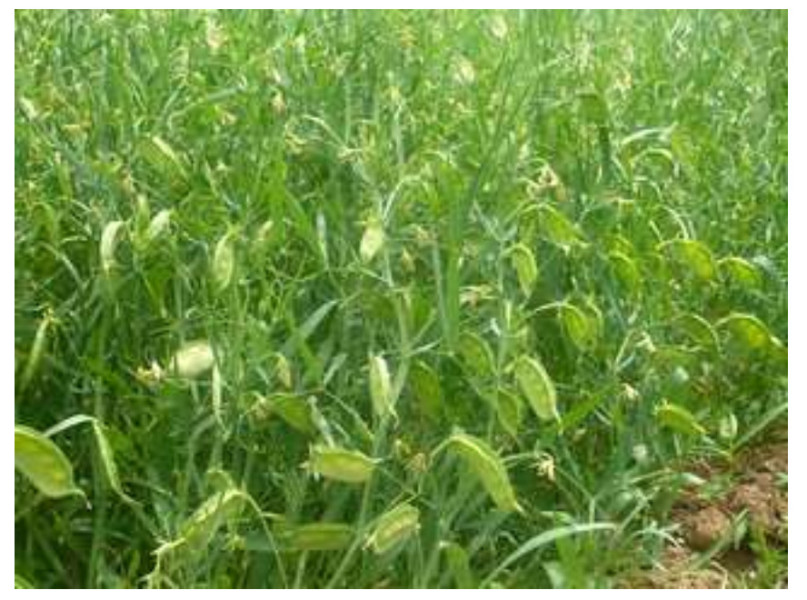
And in the midst of these accounts of bravery and fortitude, we find Shammah. The Philistines had identified a field of lentils and were gathered around it. I am sure the Israelites remembered the Philistines robbing the threshing floors, as recorded in 1 Samuel 23:1. The other Israelites evidently said, “I’m not dying for a field of lentils,” and they high-tailed it out of there. But Shammah stationed himself in the middle of the field of lentils; he defended it and killed the Philistines. Now I cannot tell you how one man killed all those Philistines, but I have a suspicion he might have had angelic help. This reminds me of the time Elisha and his servant were surrounded by the Syrian army and God allowed the servant to see the mountain was full of horses and chariots of fire around them. Maybe that same army of chariots of fire were there for Shammah. Either way, he stood his ground and defended this suddenly popular pea patch.
There are certainly some lessons we can learn from this mighty man of God who was assigned to serve king David. The first thing that I noticed is that no matter how small or seemingly insignificant a matter is, it is still important. You may think your ministry or vocation or any of the endeavors you put your hand to carries little significance in the grand scheme of God’s plan. But I can tell you that pea patch was important enough for Shammah to assume the position, even when all his comrades had fled.
Too often we are inundated with large churches or large ministries or large businesses that cause our efforts to seem pale or pathetic beside them. We feel like our efforts are miniscule compared to all this grandeur. Let us take heart in the example of Shammah, who gave no thought to the size of this field of lentils, but took his place as a mighty man of David.
Think of how he could have felt. One man kills eight hundred Philistines; another fought them so long that his hand is stuck to his sword; and here you are standing in a pea patch. But if he was one of David’s mighty men (and we know he was), he had heard plenty, maybe in song, of how majestic and great his God was. He may have been constantly exposed to the worship and adoration of God almighty. In other words, God was larger in his eyes than any challenge or potential disaster that might appear to loom on the horizon. Contrast this image with Gideon hiding in a winepress, threshing the wheat out of the sight of the Midianites. Gideon hiding and Shammah standing. May I remind you that God used both men mightily for His purpose, regardless of their inherent bravery or lack thereof.
He is not a Midianite nor a Syrian nor a Philistine, but you and I have an adversary. Peter makes no bones about it when he identifies him as “your adversary the devil.” I can assure you the devil would love for you to see whatever it is that you put your hands to as not worth fighting for or insignificant in the light of other grander displays. Because it is not the large ministries or churches or other endeavors that is making an impact in our world. It is the housewife who sits across the table and two cups of coffee while listening to a young mother list her travails of child raising and being a godly wife. It is the construction worker sitting next to a fellow worker on their break and being a good listener to why and how life has been tough on your comrade. Larger ministries and churches are certainly contributing to the extension of God’s kingdom into the earth (in answer to Jesus’ prayer in Matthew 6), but the fact is it is the common people in common places that are actually getting the job done.
As a matter of fact, the average church size (offering just one example) is 70 people. 9 million followers of Christ are part of these almost 200 thousand congregations who are daily engaged in the extension of the gospel message into the community. There are many more examples we could use, but suffice it to say, do not discount your pea patch as small, insignificant, and unimportant. If God grows your field of lentils, praise God. In the meantime, let’s not let our adversary paralyze us by causing us to look at the more visible ministries and endeavors and proverbially throwing up our hands in resignation.
The apostle Paul writes to the Corinthians that the weapons we fight with now are not fleshly. This is because, as he wrote to the Ephesians, our struggle is not with human beings, but rather the rulers, the authorities, the cosmic powers over the present darkness, and against the spiritual forces of evil in heavenly places. So, we take our stand in our proverbial pea patch that God has put our hands to and resist the devil who would seek to cause discouragement, disappointment, a sense of forlorn that would cause us to drop our hands from the plow and take up other ventures.
Therefore, another lesson from Shammah is one of accepting and assuming responsibility for the mission before us. The other Israelites who had been with Shammah obviously did not see this patch of lentils as worthy of their time and attention and in many ways, they fled from their responsibility. I sure would like to know where they fled to. And I would like to know if God entrusted them with another responsibility in His plan, did they shirk that one as well and run from it.
Maybe God has you sitting with an elderly or incapacitated person for care and friendship. Maybe you are like the woman in the movie “War Room” (2015) (a movie I highly recommend, by the way), and your “pea patch” is found in a closet that you have fashioned into a prayer closet. Maybe you are taking pizzas to some location where the homeless congregate. In all these cases, it would be easy for that enemy who is not flesh and blood to convince you that your efforts are so small and insignificant, you might as well “high-tail it” and find something you could do that might be noticed and make you feel better. But, like Shammah, if you will stand your ground and keep your hands on the plow, God will be your Victor.
Let us have the ability to respond properly to whatever task God puts before us, knowing that where God guides, He always provides. By the way, the ability to respond is —responsibility.
I will close with an example many of you have heard me cite before, but it is still one of the best I have ever heard (or read).
In Acts chapter 9 is the story of one disciple named Tabitha – which Luke tells us translated is Dorcas. It was not uncommon in that day to have a Hebrew name as well as a Greek name. In this case, Tabitha was actually the Aramean form of Hebrew, and of course, Dorcas was her Greek name. Tabitha was known for the good works and acts of charity she would do for the townsfolk. You might think at this point that she was performing great and wondrous works and someone ought to take out a full-page ad in the Joppa Gazette hailing her great works.
They were great works all right, but they resembled a field of lentils more than something that might wind up on television. Tabitha became ill and died. The town was in such an uproar that when someone told them that Peter was in nearby Lydda, they sent for him to come to Joppa. When he arrived, the widows were weeping and showing Peter all the tunics and other garments that Tabitha had made them. It has always amazed me that there might be such an uproar in a town over a lady who made tunics and other garments. But she was standing in the middle of her pea patch and keeping her hand on the plow her God had given her.
What happened? You guessed it, Peter prayed for her and she opened her eyes and sat up. Many in that region became believers in Jesus Christ after seeing what God had done with Tabitha, through the ministry of Peter. Incidentally, Peter stayed on a while in Joppa in the home of one Simon the Tanner…where he was staying when he had the vision from God about ministering to the Gentiles.
Let it be an encouragement to you that one of David’s mighty men has only 6 or 7 verses devoted to him and the account of the field of lentils is a two-verse account. And the lady who had an entire town in such an upheaval they had to send to Lydda for Peter, was known for simply making garments and tunics for the townspeople. And whatever your “pea patch” is that God has you standing in, never think of it as small or insignificant. God never deals in insignificance, but everything He ordains is greatness waiting to happen.
From the Joshua Hyslop song:
Stand Your Ground
And may you stand, stand your ground
May you stand, stand your ground
When the last step is before you
And you feel like falling down
May you stand, stand your ground